Renewables Energy, The concept of sustainable living refers to the process of making conscious choices for the improvement of the overall quality of life and embracing sustainable practices as a way of life in modern society. This green revolution is focused on optimizing the consumption of renewable energy sources and improving waste disposal techniques. There is one relatively radical solution, the combination of which is incorporated into two important aspects: the do-it-yourself digester.
By choosing to embrace and practice a DIY digester, one can help reduce the pollution of the environment and, at the same time, ensure that you have a source of renewable energy to be used in your home.
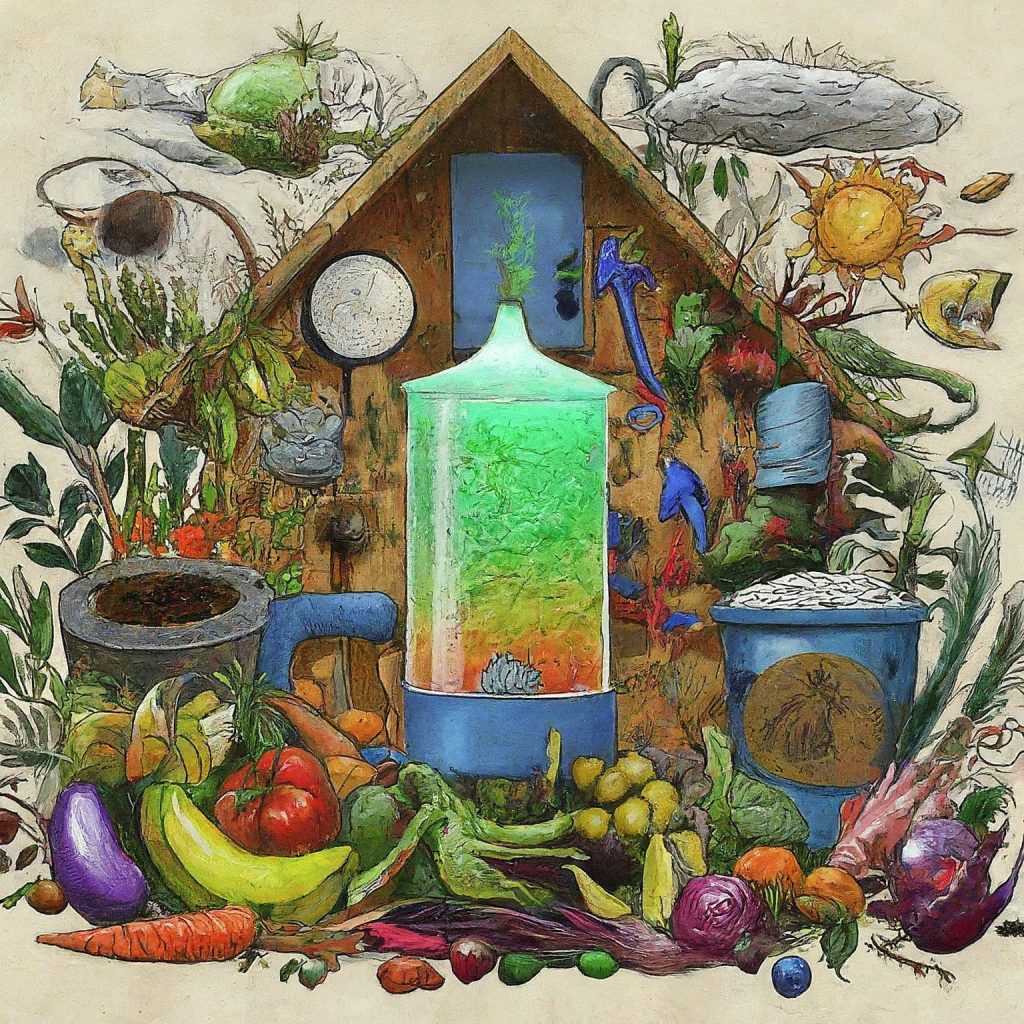
A homemade biogas plant, also termed a biogas digester, is a type of biogas plant that is home-made and functions on an enhanced mechanism of decomposing organic wastes by anaerobic digestion procedures. This process turns the waste into biogas, which is a combustible gas containing mostly methane and carbon dioxide that could be utilized as a source of energy.
The third residue that results from the anaerobic digestion process, namely digestate, can be used as an organic fertilizer in gardens and farms. This system of waste disposal also has many benefits with regards to the environment as well as the cost factor.
The following is a list of benefits that are associated with a DIY digester The biggest benefit accrued from the use of a DIY digester is the provision of renewable energy. Using biogas, you can actually cut or lower the use of conventional fuel or fossil fuel. This biogas can therefore be used in different aspects of the house, including cooking, heating water, or even lighting the house through generated electricity. The use of renewable energy sources such as biogas can be beneficial as it helps to reduce an individual carbon footprint and provides a way of life that is environmentally friendly.
Secondly, DIY digester play a vital role as a waste disposal unit, apart from producing energy to meet society’s demands. The digester can treat organic waste such as kitchen waste, horticultural and agricultural waste, and livestock waste, amongst others, without the necessity of deposition in landfills. Some of the cons that are associated with landfills include that they generate bad greenhouse gases and promote pollution. They said that constructing a home digester can turn waste into something useful, thus fostering a circular economy instead of polluting the environment.
This brings us to the other benefit of DIY digesters: they are considerably cheaper to build than their professionally made counterparts. Although the establishment cost may be high, by generating your own power from renewable sources, you can cut the cost of your house’s energy bill immensely. In addition, the digesters also yield good natural fertilizer once they undergo a process and thus do not require the use of costly fertilizer in gardening activities. This twofold advantage, where DIY digesters produce electricity for households and fertilizer simultaneously, makes these digesters economically feasible for many homes.
The benefits of using the DIY digester are impressive, as it will reduce this and many other negative impacts on the environment. This means that when you compost your organic waste, you are preventing methane gas from being released into the atmosphere, a move that is thought to be effective in lessening the green effect. Moreover, it is worth pointing out that digesters utilize the anaerobic digestion process, which does not pollute water in contrast to undisturbed waste. Of course, this now points to a cleaner environment, especially the water sources, and hence many other positive outcomes.
It is a fun and meaningful DIY project to engineer a digester, which goes well with the concept of a green lifestyle. Its drawback is that it would take time and money before it was applied, but the outcome would be worth the effort. The requirement for basic materials is to select a large, sealable jar, biogas pipe, and other measures, including the size of biogas storage bags. The construction process will comprise putting the container in place, establishing the feeding pipes, the withdrawal pipes for biogas, and others that ensure the container is isolated to enable anaerobic digestion.
Spending time constructing and managing a DIY digester will make you an active member of society in addressing renewable energy and waste management issues. Aside from enabling you to achieve your maximal principles for environmental concerns, this also has physical benefits such as saving the cost of energy and improving the status of the soil by using organic fertilizer. Such strategies and practices are needed to lead to a greener world as well as a more sustainable future.

What are the 7 main sources of renewable energy?
Renewables energy is crucial to the future because it deals with elements that differ from the fossil fuel that currently has a positive and sufficient impact on the environment. Now system boundaries focus on seven principle sources of renewable energy: solar, wind, water, biomass, geothermal, ocean, and biogas in digesters.
Solar power is directly using sunlight either by photovoltaic cells to produce electricity or solar thermal system for heating. It is also a major source of energy used for home use, business, and corporations, and is a renewable source of energy.
Wind energy harnesses wind and employs wind turbines with the aim of transforming the kinetic energy contained within wind currents into electric power. Wind power plants, onshore as well as offshore, are now regular, and since the advancement of technology, wind energy has become a major world supply.
Hydropower is the process of producing electricity based on the force exerted by the water when falling from a higher level or flowing in rivers. Hydroelectric power plants and dams store this power and make the generation of large-scale electric power quite stable. There are also what are referred to as micro and mini hydro systems for the purpose of meeting localized demand.
Biomass energy comes from burning carbonaceous substances like wood, agricultural produce, and animal droppings. These are materials in which energy is liberated during the burning process or during any other process. Biomass can be utilized in many applications, namely as heat, electricity, and bioenergy in transportation.
The third type of renewable energy is geothermal energy, which harnesses energy derived from heated soil. It is usually found where tectonic plates are located or in areas with many active volcanoes. This heat can be used directly for heating or it can be converted to electrical energy using geothermal power plants, and since it is a natural occurrence, it can be relied on to furnish energy to us continually.
Tidal energy is a form of ocean energy More accurately, ocean energy blends between tidal energy and wave energy. Tidal power utilizes the difference in gravitational force, wherein the pull of the moon and the sun on water causes tidal movement, while wave power harnesses energy from surface swells. These technologies are still developing, but one has to understand that the amount of power in the oceanic currents can be tremendous.
Diy Digester the waste management solutions from digesters is a renewables energy source different from other renewables energy sources, such as wind energy and solar energy, since it is produced through anaerobic digestion. Human and animal excreta, agricultural residues and other similar biomaterials decompose in the anaerobic chamber and release biogas mainly composed of methane. This biogas can be utilized for the generation of heat and power, as a fuel for cooking, lighting or running automobiles, among other uses.
Diy Digester the waste management solutions process also leaves behind nutrient-rich digestate, that makes it possible to use as natural fertilizer as opposed to commercial ones. Biogas digesters are most effective in regions which are rural and agricultural in nature, as it enhance the waste disposal process whilst at the same time benefiting from energy production.
These seven decentralised renewable energy resources can provide plural and synergistic solutions for decarbonizing energy, slowing climate change, and steering the global energy transition. It is possible and beneficial to shift towards the implementation of lithium-ion batteries, microgrids, and smart grids by investing in them.
Which renewables energy is best?
While all renewables energy sources offer significant environmental and economic benefits, biogas stands out as one of the most versatile and impactful options. Biogas, produced through the anaerobic digestion of organic waste materials, addresses multiple sustainability challenges simultaneously, making it arguably the best renewable energy source.
Versatility and Waste Management solutions
The generation of Diy Digester the waste management solutionsis economically efficient and environmentally suitable for managing organic wastes from families, agricultural activities and industries. Raw materials like food wastes, animal wastes, and other agricultural residuals which if allowed to accumulate would add to the landfill bulk and emitter of greenhouse gases are recycled. Apart from addressing waste disposal this paper will show that anaerobic digestion also results to the generation of useful commodities.
The producer Diy Digester the waste management solutions generated after digestion can be used for cooking, heating, generation of electricity and even as motor fuel as exhibited below. Furthermore, the residual digestate has a less mentioned but equally important function as a nutrient that can be used as a natural fertilizer, thus it supports the agriculture industry and has no harm on the environment in terms of chemical fertilizers.

Economic Advantages
It is scientifically proven that the generation of Diy Digester the waste management solutions leads to reduced Green House Gas emissions. An example of biological waste that creates an environmental issue is when organic waste is dumped in the landfills, it produces methane which is one of the most effective types of greenhouse gases. By direct this waste to biogas digester, methane emissions are either captured to generate energy out of the waste rather than being released to the atmosphere.
This works not just on the primary aspect of cutting down the overall emissions of carbon but also on the interesting concept of converting the dangerous emission in to a resourceful utility. Besides, biogas problems can be used for energy and, therefore, there is no question of burning fossile fuels, which produces carbon dioxide and thus aggravates the climate change.
Energy Independence and Reliability
The economic aspects of using Diy Digester the waste management solutions are vast as it enhance the lifestyle, especially in the rural and agriculture regions. It is important to note that biogas systems can range from very small, in the form of individual home digesters to large facilities that include industrial size digesters. They enable decentralized generation of energy and therefore was a way of cutting energy expenses as well as increasing energy safety.
This way farmers would be able to minimize the costs of disposing off the waste as well as add on the extra value by selling the energy to other farmers and the fertilizer that has been produced from the biogas. That would also help ministries of environment, health, and economic development or other organizations engaged in waste management gain the benefits of a decrease in their expenditures and an increase in positive environmental indicators.
Social and Community Impact
Diy Digester the waste management solutions systems stimulate public participation and thus provide full support for enhanced community development. At the community level, stakeholders in rural areas widely embrace biogas projects for employment opportunities, improved skills, and the use of sustainable technology. They also provide a more efficient way to dispose of human and animal waste in a manner that benefits sanitation and public health. A proper supply and efficient use of energy can positively impact various aspects of life, thus eradicating energy poverty.
In conclusion, different types of renewable energy sources are essential for the attainment of the future energy goals; however, Diy Digester the waste management solutions have the potentiality to meet the goals owing to its almost uncountable advantages. The invention efficiently deals with waste management, minimizes the effects on the environment, provides certain economic benefits, guarantees energy security, as well as contributes to the growth of community. Given that Biogas takes out organic waste and turns it into usable resources, Biogas actually has a higher incline towards the accomplishment of the sustainability objectives and the creation of a cleaner environment and greener world.
What is the principle of renewables energy system?
The idea behind the renewables energy systems is the ability to produce electricity or provide heat through the use of natural and renewable resources without shorting the global resources and with minimal impacts on the environment.
In essence, renewables energy systems will always respect sustainability as an ideal in that they will be used to fulfill present energy demands without using any resources that will limit future generation’s capability of fulfilling their energy demands. These systems use several renewables energy resources such as solar, wind, water, thermal, bio-mass, water and sea wave energy to generate clean resources.
Renewables energy system design has a number of constraints of which the following are key: Resource availability. In contrast to the availability of traditional sources such as oil, gas and coal, renewable resources such as sunlight, wind and water are readily available and can be procured from many parts of the world.
As they take advantage of the resources that are replenishing themselves in nature, renewable energy systems can be another consistent and non-depleting energy supply. But here the renewable resources are limited by geographical conditions, weather conditions, and time, so for continuous, reliable supply of energy, proper planning of supply, and application of integrated supply where multiple forms of energy will supply energy requirements must be adopted.
Thus, cross-correlation between renewables energy systems and the environment is another of the main principles. Unlike the conventional non renewables energy sources which release viscera of greenhouse gases and pollutants during the extraction, processing and burning in the conductor distribution network, the renewable energy sources emit negligible amounts when generating electricity or heat.
In essence, it is for the reduction of fossil fuel usage and combating greenhouse gasses hence curtailing climate change and environmental depletion. Also, renewable energy technologies also have fewer environmental effects in their utilization throughout technology life cycle; say during production of equipment, establishing them, usage, and even dismantling them, making the renewable energy technologies more sustainable in this aspect.
In addition, we have the issue of energy efficiency as a central principle especially in renewable energy systems. In essence, renewables can ensure the efficient use of energy resources and offer reduced efficiency losses of the conversion processes within the system. As new technologies are developed like Thin film panel for solar energy, designing wind turbines more aerodynamic, smart grid concepts to manage the electricity distribution grid, have led to improvement in the efficiency of renewable energy systems, which leads to cost reduction and hence competitiveness as compared to conventional energy systems.
All in all, the main concept of sustainability is those strategies, policies, programs, and practices formulated and followed in the development, integration, and management of renewable energy systems towards sustainable energy system transformation.

Is renewable energy the future?
The potential of renewables energy in the economy as well as the challenges associated with climate change, energy security and sustainable economic development is the un-alleviated truth that renewable energy is the future. The exhaustion of fossil fuels and the problems they pose to the environment further justify the shift towards renewable power. Solar, wind, hydropower, geothermal, biomass, and biogas are much cleaner and renewable sources having minimal impact of green house gases emission and are friendly to the environment. With the escalation of consciousness about climate change across the globe, governance, firms, and people are now beginning to put their resources on renewable energy technologies.
Technological enhancements also play the important role in the expansion of renewable forms of energy that are cheaper now. Bioenergy and hydrogen power are other options that have had significant advancements, reaching the point of becoming cheaper than conventional energy solutions such as solar panels and wind turbines. Energy storage solutions: Battery and grid management technologies help to solve the issue of intermittency of renewable energy sources, as it provides stable and reliable energy supply. Moreover, distributed, local, renewable power generation in a grid-connected or an off-grid manner, such as rooftop photovoltaics and community-based wind turbines, helps shift the jurisdiction of electrical generation from a centralized structure, and thereby increase energy security.
The last yet significant reason for harnessing renewables energy is the economic reasons to change. Renewable energy has been acknowledged to have the potential to produce employment, foster innovation, and mobilize investments. It can be seen as stimulating the development of a green economy by cutting on the use of most of the imported fuels. Apart from this, investments in renewable energy initiatives are comparatively cheaper in the long run, and so the recurrent costs are considered are more economical in the long run.
Ministries of energy across the globe are planning for long-term and short-term goals for utilizing renewable energy due to signed conventions like the Paris agreement. It is also worthwhile to note that the clean technologies are being driven by both policies and incentives like tax credits, subsidies and renewable portfolio standards. The notion on the use of renewable energies is also gaining the backing of the public due to the understanding of the advantages in terms of environmental quality, fiscal impact, and health costs.
Therefore, it can be said that the determine future energy sources, renewable energy is the power that will prevail in the future energy environment. Due to its environmental friendly impacts, the economic benefits besides being a technological fountain, it fourgates the fight in achieving sustainable and economic development.
Is hydrogen fuel renewable?
Thus, hydrogen fuel can be considered as renewables energy only in case of several conditions, and, in any case, hydrogen fuel is only an attained product, not a primary source of energy. Hydrogen is the most abundant element in the universe over all other elements and it can be a clean fuel that will greatly diminish greenhouse gas emission, if used as fuel. The ability of hydrogen fuel to be renewable may depend on the way it is produced which can be done differently using natural resources.
The way of obtaining hydrogen that is least damaging to the environment is through utilization of electrolysis and the energy used in the process can be obtained from renewable sources like sunlight, wind or water. The reduction process includes breaking water into hydrogen and oxygen through the process of electrolysis. When used to generate electricity that in turn splits water into Hydrogen and oxygen, the whole process is almost environmentally friendly and therefore, Hydrogen from this process is 100% renewable and clean. On the other hand, this hydrogen can be utilized directly in fuel cells to power automobiles, generate energy or offer heat while turning out water vapor as the only emissions.
A majority of hydrogen today is actually produced through a method called Steam Methane Reforming (SMR) where hydrogen from natural gas is extracted. Another quantity of non-renewable hydrogen production is referred to as grey hydrogen because it uses fossil fuels and releases large volumes of carbon dioxide. And there is blue hydrogen that utilise carbon capture and storage technology to cut the emissions, but again involves the use of fossil fuels.
Green hydrogen will play the critical role in bringing in the change in the energy sector for the betterment of sustainable future. For instance, green hydrogen is a unique energy vector that can provide flexible storage and transport of renewable power in the form of electricity or mechanical energy from the fluctuating solar and wind energy. It also may enable de-carbonizing segments that are difficult to electrify including heavy industries and long haul transports.
Thus, it can be ascertained that hydrogen fuel can indeed be renewable if the product of the process is made renewable by using renewable energy sources. The use of low-emissions nuclear should then be taken as a call to make the most of green hydrogen as the world transitions to a cleaner and more efficient energy system.
Are renewables sustainable?
Environmental friendly sources of energy are usually labelled as the sustainable energy sources because, instead of using up a scarce material, the equipment used to harvest the energy is designed to tap from naturally occurring natural resources that do not significantly harm the environment or natural. All these are renewable sources of energy and are environmentally friendly as compared to the fossil energy sources with are scarce and cause the green house effect through emission of carbon dioxide.
Another factor that defines sustainability of renewables energy forms is that they have negligible or very low carbon intensity. While fossil fuels are known to expel greenhouse gasses such as carbon dioxide upon burning, renewable energy sources emit minimal, if any emissions during their electricity production. It also helps in the fight against climate change as it keeps greenhouse gas emissions to a tolerable limit hence controlling the rate and effect of global warming and other related effects across the globe.
In addition, renewable electricity sources are dispersed and easily available in the global community; hence, they are not easily threatened by these aspects of geopolitics. For instance, the solar energy source can be accessed almost anywhere in the world and the same is for the wind energy some of which are onshore and offshore. This decentralisation of energies makes energy security and increases the enhancement of energy security and thus a more reliable energy infrastructure.
Revised, the social and economic value of renewables energy includes employment, electricity access, and health implications. Today, two million people are employed in the manufacturing, installation, operation, and maintenance of the renewables energy businesses. Further, energy from renewable resources eradicates the problem of energy poverty and achieves social equity as it is affordable and safe. Furthermore, the elimination of air pollution that arises as a result of burning fossil fuels benefits the population by reducing the prevalence of such diseases and, in extension, healthcare costs.
Conventional forms of energy generation have drawbacks but are relatively limited in scope, while renewable forms of energy, despite their greater sustainability, also may have negative environmental implications, examples of which include the use of land and water and the disturbance of wildlife habitats for the setting of wind turbines and solar panels. It is crucial to remember, however, that while these impacts are real, careful planning, technological advancement, and sound management practices can greatly reduce or even eliminate the negative effects of renewable energy generation so as to allow renewables to remain the critical pieces in the energy solution puzzle.
Leave a Reply